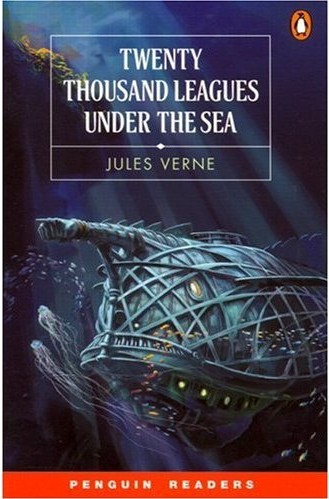
Twenty Thousand Leagues Under the Sea by Jules Verne was on my reading list for last summer, and I never got to it. I have some friends who've been telling me I need to read Jules Verne for a while now, so I went looking for it again and have just finished it. In a nutshell: his prose is gorgeous, but I think I need to read more of his books to appreciate his stories.
It honestly took me a while to get into this one. The book is basically a travelogue, and, since the main character is a marine biologist, there were exhaustive descriptions of all the fish and molluscs that live in the various seas (since 20,000 leagues is distance, not depth). The thing that kept bringing me back was the writing. Most books I've read that were originally written in French are somehow extra-beautiful. It makes me want to learn more than the dozen or so phrases I remember from less than a year of high school French.
There's more to it than I just described, though. The plot thickens the closer you get to the end. As we go on, more is revealed (or more questions are raised) about the mysterious Captain Nemo. I personally became more attached as I went along to the narrator, Dr. Aronnax, and his two companions, Ned Land and Conseil. And sometimes, the wonder and beauty of the ocean that Verne describes is really astonishing.
So, it's not thick on plot, but still thick on motivations. The writing is lovely, the characters are deftly portrayed, moments of humor and moments of drama are played thoroughly and well. If you've got time to take a bite out of something really worth chewing over, you might want to pick up Verne.
Showing posts with label book review. Show all posts
Wednesday, July 16, 2014
Wednesday, July 9, 2014
Book review(s): The Sebastian St. Cyr Mysteries
That's right, Wednesday summer book reviews are back. To re-kick off this tradition, I'm reviewing not one but nine books in a single blog post: the Sebastian St. Cyr Mysteries by C.S. Harris.
I've got kind of a thing for the Regency period. I've also got kind of a thing for murder mysteries, though I haven't much indulged the taste. Obviously I'm not the only one, or they probably wouldn't have put the two genres together.
In book 1 of the series, What Angels Fear, Sebastian, Viscount Devlin, is accused of murder. Things get tangled up quickly enough that he finds himself on the run, trying to find the real culprit to prove his innocence. By book 9, Why Kings Confess, Sebastian is regularly being turned to for help by others who know they won't get justice from the government of George, the Prince Regent.
These aren't Regency romances like Jane Austen or any of the imitators that are popular nowadays. They're not about, as Carol Howard puts it in the introduction to my copy of Pride and Prejudice, "the formal civility, the carefully prescribed manners... an English landscape devoid of industrial turmoil and the brisk pace of modern technology."
Basically, they're like an episode of NCIS in Regency England. As Harris puts it on her website, "Think Mr. Darcy with a James Bond edge."
And I love it.
Harris is an actual Regency scholar, so it's not just thrill dropped in a historical setting. Social customs are attended to (and occasionally disregarded by the maverick main character), real historical figures make well-researched appearances, and the intrigue which drives the mysteries are pulled from the war with France, the wide gap between London's elite and London's poor, and the corrupt leaders of the period.
I've compared the books to a cop show (and they do have all the chases, violence, and sex those entail), but Sebastian grows from book to book, slowly developing the beliefs that have been sleeping within him for years. For me, this process is shown more effectively than in many TV shows.
The tenth book, Who Buries the Dead, is due out next March. I hope to get ahold of it then.
I've got kind of a thing for the Regency period. I've also got kind of a thing for murder mysteries, though I haven't much indulged the taste. Obviously I'm not the only one, or they probably wouldn't have put the two genres together.
In book 1 of the series, What Angels Fear, Sebastian, Viscount Devlin, is accused of murder. Things get tangled up quickly enough that he finds himself on the run, trying to find the real culprit to prove his innocence. By book 9, Why Kings Confess, Sebastian is regularly being turned to for help by others who know they won't get justice from the government of George, the Prince Regent.
These aren't Regency romances like Jane Austen or any of the imitators that are popular nowadays. They're not about, as Carol Howard puts it in the introduction to my copy of Pride and Prejudice, "the formal civility, the carefully prescribed manners... an English landscape devoid of industrial turmoil and the brisk pace of modern technology."
Basically, they're like an episode of NCIS in Regency England. As Harris puts it on her website, "Think Mr. Darcy with a James Bond edge."
And I love it.
Harris is an actual Regency scholar, so it's not just thrill dropped in a historical setting. Social customs are attended to (and occasionally disregarded by the maverick main character), real historical figures make well-researched appearances, and the intrigue which drives the mysteries are pulled from the war with France, the wide gap between London's elite and London's poor, and the corrupt leaders of the period.
I've compared the books to a cop show (and they do have all the chases, violence, and sex those entail), but Sebastian grows from book to book, slowly developing the beliefs that have been sleeping within him for years. For me, this process is shown more effectively than in many TV shows.
The tenth book, Who Buries the Dead, is due out next March. I hope to get ahold of it then.
Monday, March 17, 2014
Shades of Milk and Honey review
After a couple months full of theater and schoolwork, I decided to treat myself to some reading: Shades of Milk and Honey, the first book of the Galmourist Histories, by Mary Robinette Kowal. I had the pleasure of meeting Mary at GenCon 2012, but only last week did I manage to pick up one of her books. I'm glad I did. I wasn't sold on the idea of Regency fantasy when I started, but as I read, I came to enjoy how well Mary's magic system works itself into the Regency world.
I've been increasingly interested in the Regency period in the last few years. I've read Pride and Prejudice upwards of a dozen times. (I may or may not have dressed as Elizabeth Bennet for Halloween last year.) It's an era that really lends itself to the aesthetic, and Mary works it.
The magic system is called glamour. Glamourists use breath (ether) in different arrangements to create illusions, even sounds and scents. The process isn't described in much technical detail, but that's not the point. The subtlety of glamour blends very well into the social setting of the Regency and thus the relationships that populate the story.
Our main character is Jane, a woman who is so nice and polite I at first couldn't believe her, but she soon develops into a remarkably subtle character. She's learned to repress her emotions and put stock in herself based on her propriety. By the end, she learns how to open herself up to her passions (and eventually takes less crap from her spoiled sister, whom I just wanted to slap. Even the sister, though, is developed enough to be believable). Love and family, in traditional novel of manners fashion, take the forefront.
Mary's elevator pitch for the series is "Jane Austen with magic." There are a few sprinklings of humor of a type you wouldn't get in an Austen book, but the idea is true to the setting. I've read that the other books depart from the typical Austen-esque plotline, but I think these characters (and glamour itself) have the potential to make other story types not only memorable, but also fun.
You may need a love of Regency or romance to get you in the door, but the characters and the magic will keep you there. I enjoyed this story and the world of glamour very much.
Find Mary's blog here.
I've been increasingly interested in the Regency period in the last few years. I've read Pride and Prejudice upwards of a dozen times. (I may or may not have dressed as Elizabeth Bennet for Halloween last year.) It's an era that really lends itself to the aesthetic, and Mary works it.
The magic system is called glamour. Glamourists use breath (ether) in different arrangements to create illusions, even sounds and scents. The process isn't described in much technical detail, but that's not the point. The subtlety of glamour blends very well into the social setting of the Regency and thus the relationships that populate the story.
Our main character is Jane, a woman who is so nice and polite I at first couldn't believe her, but she soon develops into a remarkably subtle character. She's learned to repress her emotions and put stock in herself based on her propriety. By the end, she learns how to open herself up to her passions (and eventually takes less crap from her spoiled sister, whom I just wanted to slap. Even the sister, though, is developed enough to be believable). Love and family, in traditional novel of manners fashion, take the forefront.
Mary's elevator pitch for the series is "Jane Austen with magic." There are a few sprinklings of humor of a type you wouldn't get in an Austen book, but the idea is true to the setting. I've read that the other books depart from the typical Austen-esque plotline, but I think these characters (and glamour itself) have the potential to make other story types not only memorable, but also fun.
You may need a love of Regency or romance to get you in the door, but the characters and the magic will keep you there. I enjoyed this story and the world of glamour very much.
Find Mary's blog here.
Wednesday, October 2, 2013
Steelheart review
I should have learned long ago when my older brother handed me The Hobbit to trust his taste in books. Still, it's taken a couple years. There have been many cases when he would recommend a book, I'd tell him I'd get to it eventually, and then go about my daily life thinking I could find books perfectly well myself, thanks.
Then, since I'd delayed reading Mistborn by Brandon Sanderson much longer than necessary, he bought a copy and gave it to me. Since then I've been a bit more willing to trust. Also, he no longer has to remind me to read Brandon Sanderson's books.
I read Steelheart last week with high hopes. In short, it met expectations I might have had for any other book with its premise, but didn't quite reach typical Sandersonian levels of awesome.
Don't get me wrong. I liked it quite a lot. We've got an evil superpowered ruler and a team of resisters. We've got cool technology and character development. We've got edge-of-the-seat moments sprinkled with the ethics of rebellion.
What we're missing is the Brandon Avalanche -- the part of the book where stuff starts happening and then holy cow I didn't think of that and then things keep happening and, by the end, you're left in awe of the sheer brilliance of all the plot details and action you couldn't have imagined coming together in so short a time. Instead, we get a somewhat tamer climax.
But there are more books coming, and there are still questions unanswered. Nicely done, Sanderson.
As per usual, things were most exciting when we got to see the worldbuilding work. Supervillains -- called Epics -- exercise their powers and succumb to weaknesses. A city turned entirely to steel changes the lives of the people of Newcago. And we see how these things changed how one young man grew up -- David, the main character.
David is kind of awkward. I had to accept the awkwardness as part of the character and not the writing itself, but once I did, I was willing to go along with some of the running jokes (David's inability to make a good metaphor, being distracted in his thoughts as he talks to the reader, etc.). It works to show a kid who didn't get a normal childhood because he was too busy plotting revenge on his father's killer and still has some growing up to do. (Seeing this quirky 18-year-old guy launched into a group of hardened fighters is pretty endearing.)
The book isn't long, but it's packed full. Details are dropped at a headlong run as the story progresses, which was great, but description isn't Sanderson's strongest point. Again, I got used to it as we went along, but I might have wished some of the information to be more smoothly integrated into the plot. Usually I cared too much about what was happening for it to pull me out.
Team and leadership dynamics are some of Sanderson's favorite things, and we revisit those here. I love that in a tough, dystopian world, Sanderson makes his characters laugh. The thing is, he seems to like to do that by inserting at least one character who acts the clown. I love zany, humorous characters, but it's just not as fun when an author uses the same zany, humorous character every time (okay, so just once before in Alloy of Law, but still).
I've been nitpicking, but that doesn't negate the fact that I read this book within a day even though I kept telling myself I had homework to do. Do yourself a favor. Read this one, and then wait breathlessly for Firefight to come out next year.
And Mr. Sanderson? Bring back the avalanche. I know you want to.
Then, since I'd delayed reading Mistborn by Brandon Sanderson much longer than necessary, he bought a copy and gave it to me. Since then I've been a bit more willing to trust. Also, he no longer has to remind me to read Brandon Sanderson's books.
I read Steelheart last week with high hopes. In short, it met expectations I might have had for any other book with its premise, but didn't quite reach typical Sandersonian levels of awesome.
Don't get me wrong. I liked it quite a lot. We've got an evil superpowered ruler and a team of resisters. We've got cool technology and character development. We've got edge-of-the-seat moments sprinkled with the ethics of rebellion.
What we're missing is the Brandon Avalanche -- the part of the book where stuff starts happening and then holy cow I didn't think of that and then things keep happening and, by the end, you're left in awe of the sheer brilliance of all the plot details and action you couldn't have imagined coming together in so short a time. Instead, we get a somewhat tamer climax.
But there are more books coming, and there are still questions unanswered. Nicely done, Sanderson.
As per usual, things were most exciting when we got to see the worldbuilding work. Supervillains -- called Epics -- exercise their powers and succumb to weaknesses. A city turned entirely to steel changes the lives of the people of Newcago. And we see how these things changed how one young man grew up -- David, the main character.
David is kind of awkward. I had to accept the awkwardness as part of the character and not the writing itself, but once I did, I was willing to go along with some of the running jokes (David's inability to make a good metaphor, being distracted in his thoughts as he talks to the reader, etc.). It works to show a kid who didn't get a normal childhood because he was too busy plotting revenge on his father's killer and still has some growing up to do. (Seeing this quirky 18-year-old guy launched into a group of hardened fighters is pretty endearing.)
The book isn't long, but it's packed full. Details are dropped at a headlong run as the story progresses, which was great, but description isn't Sanderson's strongest point. Again, I got used to it as we went along, but I might have wished some of the information to be more smoothly integrated into the plot. Usually I cared too much about what was happening for it to pull me out.
Team and leadership dynamics are some of Sanderson's favorite things, and we revisit those here. I love that in a tough, dystopian world, Sanderson makes his characters laugh. The thing is, he seems to like to do that by inserting at least one character who acts the clown. I love zany, humorous characters, but it's just not as fun when an author uses the same zany, humorous character every time (okay, so just once before in Alloy of Law, but still).
I've been nitpicking, but that doesn't negate the fact that I read this book within a day even though I kept telling myself I had homework to do. Do yourself a favor. Read this one, and then wait breathlessly for Firefight to come out next year.
And Mr. Sanderson? Bring back the avalanche. I know you want to.
Wednesday, August 14, 2013
The Missionary review
My mom read this book before I did, and her reaction was, "I was kind of expecting more of a Christian message at the end."
I think I hemmed and hawed for a few moments before trying to tell her that dropping a churchy-stamped anvil on a reader's head is not what most writers are going for. Then I actually read the book. You know what? She was right.
The Missionary, by William Carmichael and David Lambert, was kind of a mixed bag for me, but my reaction was positive overall. And truth be told, there are a lot of good messages you can draw from it. How the decisions we make affect the people around us. Reliance on God. Trust in marriage. These themes are tucked into a plot that was a lot more like a spy-thriller than the Amish fiction-esque story I was expecting (I guess I didn't read the back, or look too closely at the cover).
The story is about David Eller, a missionary in modern-day Venezuela who leads a mission that shelters orphans. David is bitter at the system that puts so many children on the streets, and when he gets a chance to attack the disease instead of the symptoms, he takes it. Things get complicated quickly.
There's a lot of descriptive detail in here - technical details of plans and operations, down to the weapons. Also, a rather strange tendency to give the height and weight of most of the characters you meet. Perhaps that fits the way the military characters think. I thought it was weird. Some of the details build to vivid moments, which is good, and sometimes the models of the machine guns or whatever went over my head. Tastes will vary.
One thing I didn't like was that some characters only existed for plot advancement. It fits with the movement and variety, which feels intentional, but there are a few characters I wanted more well-rounded -- David's father and brother, for instance. There were a lot of elements in this, characters among them, that were used and then concluded without the mind-boggling connections and purpose I like in a plot-heavy book. Not everything gets explained, which I liked okay, and there were a few good surprises, but sometimes I wanted more explanations and connections that could have given thematic unity -- the "message" I felt was missing at the end.
It never gets back to David's mission; after a while, helping the poor impoverished children fades away. Sure, his life and loved ones were in danger, but the story didn't follow up on the consequences of his actions on his ministry. I guess there were other things to talk about, but I bet it could have been skillfully woven in, again, leading to a more solid ending.
Still, the things the authors did led to an action-packed and exciting book. You empathize with important characters, even some rough mercenary types, and the Christianity isn't forced. (Actually, I thought it could have taken a more central role toward the end.) I liked the complexity and beauty in the Ellers' relationship, and there are a few moments where the prose itself sparkles (and a few where it tries, but falls flat). If anything I've said here intrigues, you might want to give it a look.
I think I hemmed and hawed for a few moments before trying to tell her that dropping a churchy-stamped anvil on a reader's head is not what most writers are going for. Then I actually read the book. You know what? She was right.
The Missionary, by William Carmichael and David Lambert, was kind of a mixed bag for me, but my reaction was positive overall. And truth be told, there are a lot of good messages you can draw from it. How the decisions we make affect the people around us. Reliance on God. Trust in marriage. These themes are tucked into a plot that was a lot more like a spy-thriller than the Amish fiction-esque story I was expecting (I guess I didn't read the back, or look too closely at the cover).
The story is about David Eller, a missionary in modern-day Venezuela who leads a mission that shelters orphans. David is bitter at the system that puts so many children on the streets, and when he gets a chance to attack the disease instead of the symptoms, he takes it. Things get complicated quickly.
There's a lot of descriptive detail in here - technical details of plans and operations, down to the weapons. Also, a rather strange tendency to give the height and weight of most of the characters you meet. Perhaps that fits the way the military characters think. I thought it was weird. Some of the details build to vivid moments, which is good, and sometimes the models of the machine guns or whatever went over my head. Tastes will vary.
One thing I didn't like was that some characters only existed for plot advancement. It fits with the movement and variety, which feels intentional, but there are a few characters I wanted more well-rounded -- David's father and brother, for instance. There were a lot of elements in this, characters among them, that were used and then concluded without the mind-boggling connections and purpose I like in a plot-heavy book. Not everything gets explained, which I liked okay, and there were a few good surprises, but sometimes I wanted more explanations and connections that could have given thematic unity -- the "message" I felt was missing at the end.
It never gets back to David's mission; after a while, helping the poor impoverished children fades away. Sure, his life and loved ones were in danger, but the story didn't follow up on the consequences of his actions on his ministry. I guess there were other things to talk about, but I bet it could have been skillfully woven in, again, leading to a more solid ending.
Still, the things the authors did led to an action-packed and exciting book. You empathize with important characters, even some rough mercenary types, and the Christianity isn't forced. (Actually, I thought it could have taken a more central role toward the end.) I liked the complexity and beauty in the Ellers' relationship, and there are a few moments where the prose itself sparkles (and a few where it tries, but falls flat). If anything I've said here intrigues, you might want to give it a look.
Wednesday, August 7, 2013
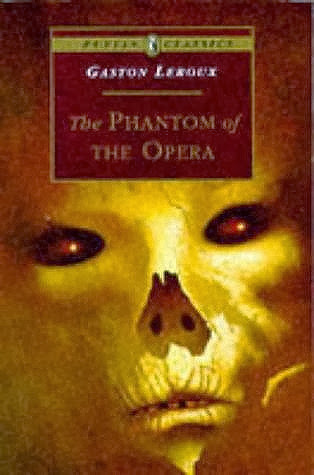
Phantom of the Opera review
The Phantom is a heck of a lot creepier than in the movie. Just sayin'.
As a theater person, I was particularly interested in Gaston Leroux's The Phantom of the Opera. Though I don't love the movie musical, one thing it impressed me with was a deep sense of the theatrical. I was interested to find that they didn't add that in. They took it straight from the book.
If you want to read more classics, but don't have time for really thick or dense books, I'd recommend this one. It's short and has enough thrill to keep you going, even with ornate details and the overwrought setup. (I mean that in the best way. It really works for the tone he's going for.) It also has an element I can't describe as anything other than Frenchness.
Things I liked: fast pace, overtones of horror that fit really well with the theatrical scenery, the way side plots got worked in, the Paris opera house, Christine, the Persian. Though he doesn't spend a lot of time forming their characters, Leroux gives us a vivid sense of what they're like. I was more impressed with Christine than I thought I'd be.
Things I didn't like: Raoul. I've always thought he was a bit wimpy, and though Leroux takes pains to tell us that he's brave, we get no sense of what he's like other than obsessed with Christine to the point of selfishness. Kind of creepy.
But not as creepy as the Phantom.
As a theater person, I was particularly interested in Gaston Leroux's The Phantom of the Opera. Though I don't love the movie musical, one thing it impressed me with was a deep sense of the theatrical. I was interested to find that they didn't add that in. They took it straight from the book.
If you want to read more classics, but don't have time for really thick or dense books, I'd recommend this one. It's short and has enough thrill to keep you going, even with ornate details and the overwrought setup. (I mean that in the best way. It really works for the tone he's going for.) It also has an element I can't describe as anything other than Frenchness.
Things I liked: fast pace, overtones of horror that fit really well with the theatrical scenery, the way side plots got worked in, the Paris opera house, Christine, the Persian. Though he doesn't spend a lot of time forming their characters, Leroux gives us a vivid sense of what they're like. I was more impressed with Christine than I thought I'd be.
Things I didn't like: Raoul. I've always thought he was a bit wimpy, and though Leroux takes pains to tell us that he's brave, we get no sense of what he's like other than obsessed with Christine to the point of selfishness. Kind of creepy.
But not as creepy as the Phantom.
Wednesday, July 31, 2013
1491 review
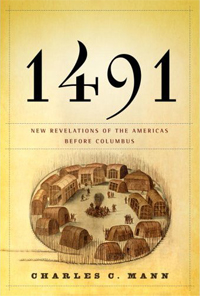
1491: New Revelations of the Americas Before Columbus by Charles C. Mann caught my eye in the library. It promised new revelations, and I did learn a lot, though I didn't retain all the names and dates I was probably intended to. I thought at times it moved a little slowly, but that may be because I was taking breaks and reading other things at the same time.
It's more interesting than that sounds, I promise. Mann is an engaging writer, and he goes between reconstructions of ancient world politics, archaeological excavations, and his own personal explorations smoothly to create a varied and interesting narrative. He explained some widely-held misconceptions about the pre-Columbian Americas and showed us how they're probably wrong, but not in a snobby, scholarly way. He takes us on a voyage of discovery. He quotes dozens and dozens of experts, and it looks like he's done his homework.
Well... most of it. Probably all the important homework. But I did catch one detail that made his credibility slip in my mind. In chapter 5, he explains one very old (and now discounted) theory that Native Americans were actually the lost tribes of Israel:
... at that time, according to scripture, the Hebrew tribes had split into two adjacent confederations, the northern kingdom of Judah, with its capital Jerusalem, and the southern kingdom of Israel, with its capital in Samaria. After the southern tribes took to behaving sinfully, divine retribution came in the form of Shalmaezer V.... now repenting of their wickedness, the Bible explains, the tribes resolved to "go to a distant land never yet inhabited by man, and there at last be obedient to their laws."Having read the Bible before (even took a Hebrew prophets class!), I noticed he had it mixed up: Israel was the northern kingdom, Judah the southern.
Is this terribly relevant to the rest of the book? Probably not. It was one tiny detail, and maybe even an accident. However, as my writing professor has often repeated, one tiny detail wrong can cast doubt on all the rest of your work. It's a pretty simple one, too. I wonder that editors didn't catch it. They're supposed to have people check these sorts of things (or he could have done a Google image search. Or something.).
This error belies the 100-some pages of bibliography, notes, and appendices, however. You be the judge.
I read this book because I like to learn. Aside from just facts and accounts, it gave me a look into the worlds of archaeology and anthropology and the fierce, still ongoing debates about what we've learned really means. It fleshed out a culture that for me still looked like the Indians I learned about in elementary school. Now, I don't imagine pictures -- I imagine people. Living, breathing cultures, rooted in humanity just as much as they are in the mysteries of the past. It was eye-opening. I guess nonfiction will do that for you.
Wednesday, July 24, 2013
Forgotten God review
I haven't read too many of the books I put on my to-read list this summer. I want to blame my small-town library that doesn't have the books I planned to read (and charges money for an inter-library loan; I'm still grumbling about that), but I already had some of them. I took one of them home with me from school: Forgotten God, by Francis Chan.
This was assigned reading for the discipleship program I'm in for my second year. (Last year's book was With by Skye Jethani; I recommend all Christians go read it now. Or you can read this one first, if you like.) I'm glad there are people who make disciples of Jesus for a living so they can point me at good books, among other things. I have not read Chan's Crazy Love, but I've heard good things about it. If it's as good as this one, I'll put Crazy Love close to the top of my reading list.
Forgotten God is subtitled "Reversing our tragic neglect of the Holy Spirit." This intrigued me, because for a while I've had the sneaking suspicion that I was doing just that. How was I supposed to interact with the Holy Spirit? Where was the warm, fuzzy feeling I'd hoped for, expected? Why didn't I feel like I hadn't learned anything about Him in church?
Maybe I didn't get direct answers to those questions, but Chan, in clear, effective language, described what a relationship with the Holy Spirit looks like and why we need it. He put in useful terms things I needed to hear and refreshed my enthusiasm for spiritual discipline.
This is not a book to be read without study or reflection. I know, because I feel like I missed a ton when I read it in bits and pieces over the summer. I'm going to give it another go before I head back to school because I want to absorb everything. Some of the lessons that stood out to me, though this is far from the sum of the book, were these:
This was assigned reading for the discipleship program I'm in for my second year. (Last year's book was With by Skye Jethani; I recommend all Christians go read it now. Or you can read this one first, if you like.) I'm glad there are people who make disciples of Jesus for a living so they can point me at good books, among other things. I have not read Chan's Crazy Love, but I've heard good things about it. If it's as good as this one, I'll put Crazy Love close to the top of my reading list.
Forgotten God is subtitled "Reversing our tragic neglect of the Holy Spirit." This intrigued me, because for a while I've had the sneaking suspicion that I was doing just that. How was I supposed to interact with the Holy Spirit? Where was the warm, fuzzy feeling I'd hoped for, expected? Why didn't I feel like I hadn't learned anything about Him in church?
Maybe I didn't get direct answers to those questions, but Chan, in clear, effective language, described what a relationship with the Holy Spirit looks like and why we need it. He put in useful terms things I needed to hear and refreshed my enthusiasm for spiritual discipline.
This is not a book to be read without study or reflection. I know, because I feel like I missed a ton when I read it in bits and pieces over the summer. I'm going to give it another go before I head back to school because I want to absorb everything. Some of the lessons that stood out to me, though this is far from the sum of the book, were these:
- You can pray to the Holy Spirit. This was something I'd never thought of before.
- This quote from near the end of the book: "We often choose to face life's issues and circumstances in exactly the same way as someone without the Spirit of God." Food for thought.
- TRUST the Holy Spirit. This one's really come into play for me the last few days.
Wednesday, July 17, 2013
American Gods review
As a writer, reader, and consumer of media, there are certain things I've come to expect from a story. Starts, stops, turning points in specific places, character decisions, final showdowns. Many stories are, to some extent, predictable. That's okay -- these are the things that orient us in the story's world, and within that framework there is room for surprise and intrigue.
And then there are books where I don't have any idea when any of that is coming, but it's seamless and stimulating anyway. Maybe I just need to read more Neil Gaiman and I'll get used to it.
American Gods was gripping, original, and fascinating. To give a basic premise, imagine that all the gods of all the people who ever came to America followed them over. And further imagine that they stayed here, fading, when people stopped believing.
It's not that simple, though. We follow a man named Shadow who travels across the country working for the mysterious Mr. Wednesday. We meet the new American gods, beings of information and efficiency, who know that they're just as temporary as the gods who came before them. We feel the tension rising in a country that is undoubtedly America -- but an America in which the dark imaginings of our forebears still live.
Like I said, I could never say what was coming next, even when some of the mysteries began to be revealed. There are even a few mysteries left unanswered, which I liked. However, this book is not for all readers. There's plenty of disturbing, sexual, and violent content. For the most part I think it made sense in context, but it's strong.
I was glad to read a story that didn't play to my expectations. I have previously read Gaiman's Stardust and Coraline, and those are fascinating reads as well. If you're looking for a storyteller who can take you places, Gaiman's your man. But watch out for the gods.
And then there are books where I don't have any idea when any of that is coming, but it's seamless and stimulating anyway. Maybe I just need to read more Neil Gaiman and I'll get used to it.
American Gods was gripping, original, and fascinating. To give a basic premise, imagine that all the gods of all the people who ever came to America followed them over. And further imagine that they stayed here, fading, when people stopped believing.
It's not that simple, though. We follow a man named Shadow who travels across the country working for the mysterious Mr. Wednesday. We meet the new American gods, beings of information and efficiency, who know that they're just as temporary as the gods who came before them. We feel the tension rising in a country that is undoubtedly America -- but an America in which the dark imaginings of our forebears still live.
Like I said, I could never say what was coming next, even when some of the mysteries began to be revealed. There are even a few mysteries left unanswered, which I liked. However, this book is not for all readers. There's plenty of disturbing, sexual, and violent content. For the most part I think it made sense in context, but it's strong.
I was glad to read a story that didn't play to my expectations. I have previously read Gaiman's Stardust and Coraline, and those are fascinating reads as well. If you're looking for a storyteller who can take you places, Gaiman's your man. But watch out for the gods.
Wednesday, July 10, 2013
A Connecticut Yankee at King Arthur's Court review
This was my first experience with Mark Twain. Through what's probably egregious neglect as a reader, I've never read Tom Sawyer or Huckleberry Finn, and so his style was new to me. It was, to say the least, interesting.
It took me a while to get into A Connecticut Yankee, I think because the story picked up more toward the end. There isn't too much in the way of plot events, problems to overcome, hidden mysteries that become revealed. Rather, our narrator simply tells us things as they come, or advises us of things he set in motion earlier.
Hank Morgan, a factory supervisor from 1890s Connecticut, is suddenly transported to Arthurian England. In a few years, he goes from being a prisoner to be executed to chief minister of the land. He explains this convoluted process as if it's the most natural thing in the world, a plan put into motion through sheer American know-how and ingenuity. It gives you a feel for the man, and that was part of my problem with it -- I couldn't quite tell if I liked Hank Morgan or hated him. I always have a hard time getting through a book if I don't like the protagonist, but in the end he proved to be interesting, entertaining, and very sharp.
There's satire aplenty, and themes of freedom and independence. But it's dark. Twain's wit is through Morgan directed mercilessly against an era we're not used to looking at with such spite. I have a deep fondness for stories of knights and castles and such things; maybe the story was written for people like me, to slap us out of such sentimental nonsense into what, after some thought, appears to be much more like reality. Of course it would be a huge pain to go galloping across the country in full plate armor. And the nobles probably were that terrible to the common people in those days. But then, we're given an image like a knight with a sandwichboard sign advertising ovens, or soap, or a newfangled sewing machine, and we have to laugh.
Whether you like this book or not is really going to depend on what kind of book you usually enjoy. If you do like somewhat older-fashioned books, if you do like satire, if you can handle a fair amount of descriptive noodling before getting down to the meat and bones of the plot -- have at it. From A Connecticut Yankee alone, I can definitely say Twain is a must for any serious reader.
It took me a while to get into A Connecticut Yankee, I think because the story picked up more toward the end. There isn't too much in the way of plot events, problems to overcome, hidden mysteries that become revealed. Rather, our narrator simply tells us things as they come, or advises us of things he set in motion earlier.
Hank Morgan, a factory supervisor from 1890s Connecticut, is suddenly transported to Arthurian England. In a few years, he goes from being a prisoner to be executed to chief minister of the land. He explains this convoluted process as if it's the most natural thing in the world, a plan put into motion through sheer American know-how and ingenuity. It gives you a feel for the man, and that was part of my problem with it -- I couldn't quite tell if I liked Hank Morgan or hated him. I always have a hard time getting through a book if I don't like the protagonist, but in the end he proved to be interesting, entertaining, and very sharp.
There's satire aplenty, and themes of freedom and independence. But it's dark. Twain's wit is through Morgan directed mercilessly against an era we're not used to looking at with such spite. I have a deep fondness for stories of knights and castles and such things; maybe the story was written for people like me, to slap us out of such sentimental nonsense into what, after some thought, appears to be much more like reality. Of course it would be a huge pain to go galloping across the country in full plate armor. And the nobles probably were that terrible to the common people in those days. But then, we're given an image like a knight with a sandwichboard sign advertising ovens, or soap, or a newfangled sewing machine, and we have to laugh.
Whether you like this book or not is really going to depend on what kind of book you usually enjoy. If you do like somewhat older-fashioned books, if you do like satire, if you can handle a fair amount of descriptive noodling before getting down to the meat and bones of the plot -- have at it. From A Connecticut Yankee alone, I can definitely say Twain is a must for any serious reader.
Wednesday, July 3, 2013
Same Kind of Different As Me review
This was a random find in the library, though I'd been meaning to read it for a while based on the cool title alone. I was expecting a clever story carefully following the title's theme. It turned out that it wasn't the book I thought it would be -- it was better.
Same Kind of Different As Me by Ron Hall and Denver Moore (with Lynn Vincent) is a story so good you'd think it's fiction, but it's not. It actually happened that a homeless guy would be best friends with a millionaire art dealer. And the art dealer's wife saw it in a dream. And had a dream bigger than that -- that they would change the city and reach out to the homeless.
Before that, it's about a struggling marriage that God turned around. It's about a sharecropper who stumbled though life until finding peace. We see the broken world that made them both, and then we see how they changed it.
In the whole story, God shines through. He's not plastered on top, like some Christian books try to do. You can see that the events were the work of His hands.
Writing-wise, it's engaging throughout. A strong dialect is used for Denver's point of view, but it doesn't detract from the story. Especially towards the beginning, I was even more eager to read his chapters than Ron's, maybe because his story was so foreign to me.
In retrospect, the only thing I would criticize is the title. The phrase is dropped toward the end of the book, but I didn't see a thematic reason why it would be picked up and put on the cover. The people in the story are very different from each other, but they still connected. Manipulating the words into the title seemed kind of forced. In any case, it got me to pick up the book, so I'll stop complaining.
It's inspiring, engaging, and beautiful. I heartily recommend it to everyone.
Same Kind of Different As Me by Ron Hall and Denver Moore (with Lynn Vincent) is a story so good you'd think it's fiction, but it's not. It actually happened that a homeless guy would be best friends with a millionaire art dealer. And the art dealer's wife saw it in a dream. And had a dream bigger than that -- that they would change the city and reach out to the homeless.
Before that, it's about a struggling marriage that God turned around. It's about a sharecropper who stumbled though life until finding peace. We see the broken world that made them both, and then we see how they changed it.
In the whole story, God shines through. He's not plastered on top, like some Christian books try to do. You can see that the events were the work of His hands.
Writing-wise, it's engaging throughout. A strong dialect is used for Denver's point of view, but it doesn't detract from the story. Especially towards the beginning, I was even more eager to read his chapters than Ron's, maybe because his story was so foreign to me.
In retrospect, the only thing I would criticize is the title. The phrase is dropped toward the end of the book, but I didn't see a thematic reason why it would be picked up and put on the cover. The people in the story are very different from each other, but they still connected. Manipulating the words into the title seemed kind of forced. In any case, it got me to pick up the book, so I'll stop complaining.
It's inspiring, engaging, and beautiful. I heartily recommend it to everyone.
Wednesday, June 26, 2013
Pillars of the Earth review
Coming back from spring break, my ride and I had a few hours to kill before picking up his roommate at the airport. We spent the entirety of it at Barnes and Noble. I wandered half the store, picking up anything that caught my eye. One of the books I wrote down to find at a library later (poor college student) was Pillars of the Earth, by Ken Follett.
I'll admit I grabbed it for the cool, architecture-y cover and extra-fine paper, but then I read the foreword by the author himself. Follett explained that even though he usually wrote thrillers, he had become fascinated by cathedrals over the course of his life, and wanted to write a book about one being built. He wasn't a Christian, having grown up in a strict Plymouth Brethren church and disliked it, but that didn't dissuade him from visiting cathedrals in every city he visited.
He certainly did his research. I still needed to look up some of the terms to understand the different parts of the cathedral, but the picture he puts together gives a good idea for the scope of such an enormous and intricate building. His dislike of the church also didn't keep him from writing a very well-fleshed out and godly monk, who was my favorite character in the novel. (I go to a Plymouth Brethren church, by the way.) I appreciated his ability to find Prior Philip's perspective and make it equal to those of the non-Christian characters in the novel.
We also follow Tom, the man whose dream is to build a cathedral; fierce and beautiful Aliena, a noblewoman fighting to regain her place; the unconventional Jack, who follows in the footsteps of his stepfather, Tom; the malevolent Bishop Waleran Bigod, master manipulator; and William Hamleigh, the ascended bully with an agenda.
Overall, I liked the book, but there were some disappointments. Most doorstoppers I read (Brandon Sanderson, Robert Jordan, Neal Stephenson) have a TON of plot in them. It only makes sense, for such a large book. Pillars of the Earth kept me reading, but I was surprised that a thriller writer didn't put in some more twists and turns as to character motivations and turns of event. Part of this had to do with tying in actual historical elements; another factor was using the point of view of one of the villians, William Hamleigh. Thus, we would see dastardly plans being planned, and then we wouldn't be surprised when our good guys reacted to them. This actually did more good for the book than bad, but still, I wanted more surprise and thrill than was present. There was one big mystery that lasted for the whole course of the book, but it was more in the background than anything else. Bringing that forward could have helped pull readers along for the 60 in-story years and 900+ pages.
I had nothing to complain about with the writing itself -- and not much to praise, either. The prologue did an excellent job of hooking the reader, but other than that the writing was straightforward, though with a decent amount of differentiation between character voices. With such a big scope, I could have wished for more beautiful, memorable words.
Another thing that disappointed me personally was the amount of sex in the book. Apparently this is standard fare with Ken Follett, something I didn't know going in, so I was unprepared. This goes back to the dastardly villain thing; William Hamleigh rapes multiple women over the course of the book, mostly to show the readers exactly what kind of person he is. It's effective at that. I found it excessive -- it's quite graphic in almost every instance. Your mileage may vary. There's also a fair amount of violence, but since it deals with war and medieval England, I found it justifiable.
Still, villains are fought, futures are wrought, and all the characters we've been rooting for and against get endings worth reading about. For reasons previously stated, I won't be picking up the sequels. Still, I'm glad I read it.
I'll admit I grabbed it for the cool, architecture-y cover and extra-fine paper, but then I read the foreword by the author himself. Follett explained that even though he usually wrote thrillers, he had become fascinated by cathedrals over the course of his life, and wanted to write a book about one being built. He wasn't a Christian, having grown up in a strict Plymouth Brethren church and disliked it, but that didn't dissuade him from visiting cathedrals in every city he visited.
He certainly did his research. I still needed to look up some of the terms to understand the different parts of the cathedral, but the picture he puts together gives a good idea for the scope of such an enormous and intricate building. His dislike of the church also didn't keep him from writing a very well-fleshed out and godly monk, who was my favorite character in the novel. (I go to a Plymouth Brethren church, by the way.) I appreciated his ability to find Prior Philip's perspective and make it equal to those of the non-Christian characters in the novel.
We also follow Tom, the man whose dream is to build a cathedral; fierce and beautiful Aliena, a noblewoman fighting to regain her place; the unconventional Jack, who follows in the footsteps of his stepfather, Tom; the malevolent Bishop Waleran Bigod, master manipulator; and William Hamleigh, the ascended bully with an agenda.
Overall, I liked the book, but there were some disappointments. Most doorstoppers I read (Brandon Sanderson, Robert Jordan, Neal Stephenson) have a TON of plot in them. It only makes sense, for such a large book. Pillars of the Earth kept me reading, but I was surprised that a thriller writer didn't put in some more twists and turns as to character motivations and turns of event. Part of this had to do with tying in actual historical elements; another factor was using the point of view of one of the villians, William Hamleigh. Thus, we would see dastardly plans being planned, and then we wouldn't be surprised when our good guys reacted to them. This actually did more good for the book than bad, but still, I wanted more surprise and thrill than was present. There was one big mystery that lasted for the whole course of the book, but it was more in the background than anything else. Bringing that forward could have helped pull readers along for the 60 in-story years and 900+ pages.
I had nothing to complain about with the writing itself -- and not much to praise, either. The prologue did an excellent job of hooking the reader, but other than that the writing was straightforward, though with a decent amount of differentiation between character voices. With such a big scope, I could have wished for more beautiful, memorable words.
Another thing that disappointed me personally was the amount of sex in the book. Apparently this is standard fare with Ken Follett, something I didn't know going in, so I was unprepared. This goes back to the dastardly villain thing; William Hamleigh rapes multiple women over the course of the book, mostly to show the readers exactly what kind of person he is. It's effective at that. I found it excessive -- it's quite graphic in almost every instance. Your mileage may vary. There's also a fair amount of violence, but since it deals with war and medieval England, I found it justifiable.
Still, villains are fought, futures are wrought, and all the characters we've been rooting for and against get endings worth reading about. For reasons previously stated, I won't be picking up the sequels. Still, I'm glad I read it.
Sunday, September 23, 2012
Redeeming Love and the Book of Hosea
Last weekend, I devoured Francine Rivers's Redeeming Love. I rarely love Christian fiction, and I don't typically read romance, but after hearing how wonderful it was and finding it almost magically on my roommate's desk, I had to pick it up. I read until four in the morning and then I started again at 10 a.m. the next day until I was finished.
Coincidentally, a few days afterward, we started studying Hosea in my Hebrew prophets class. We're not all the way through, but only the first three chapters deal with the events Redeeming Love is largely based on -- Hosea, at God's command, taking the prostitute Gomer for a wife. The rest of Hosea goes back into the prophet-speak that until recently I had a hard time concentrating on.
I haven't read anything else by Francine Rivers, and I won't say that it's the best writing I've ever read. But something about Redeeming Love is deeply touching and personal. Mirrored in the complexities of Angel and Michael's relationship are a thousand circumstances and feelings that I've struggled with in my relationship with God.
The story is beautiful. However, it doesn't correspond perfectly with the events in Hosea.
Maybe that wasn't what Rivers was going for. That's fine. I'd just always heard it was "based on the book of Hosea" and so assumed certain things about it. In Redeeming Love, the relationship between Israel and God is reflected in a very personal way, but the story in the Bible is just a little different.
While reading the book of Hosea, I was always confused by how God commands Hosea to take Gomer back after she's run away: "Go again, love a woman who is loved by a lover and is committing adultery..." (NKJV) It never seemed to me that the wording suggested God was actually talking about Gomer. A woman? Is that specific enough? It turns out that it's not specific in the Hebrew, either. It doesn't actually say that Gomer runs away back to prostitution, either. People kind of infer the story from the way God and Hosea address Israel in the rest of the book. I have to wait til we're done studying Hosea to draw any more conclusions.
But what's the point? I don't know enough to be able to say what really happened to Hosea. He took the prostitute Gomer for a wife, and then again redeemed an adulteress with love. But I still think Rivers is dead on in her interpretation of the main point of the book: God wants to win back those unfaithful to Him with His love.
It's easy to take a mistaken stance in Christianity and focus on your behavior, the effectiveness of the church, even something so big as missions and make that the focal point, but really, it comes down to being loved by God. Until you understand that, you can't really love Him back. None of your good deeds can save you. You can't hide your sin. Your American Protestant work ethic does not help you. It's love God, or nothing. Anything else is prostitution of the heart.
I recommend the book to high schoolers and up. It's not graphic, but it does mention out of necessity some... well... the main character is a prostitute, after all. It's more important to realize what the story represents and how it reflects on us. It's about God's redeeming love for us. Nothing else.
Coincidentally, a few days afterward, we started studying Hosea in my Hebrew prophets class. We're not all the way through, but only the first three chapters deal with the events Redeeming Love is largely based on -- Hosea, at God's command, taking the prostitute Gomer for a wife. The rest of Hosea goes back into the prophet-speak that until recently I had a hard time concentrating on.
I haven't read anything else by Francine Rivers, and I won't say that it's the best writing I've ever read. But something about Redeeming Love is deeply touching and personal. Mirrored in the complexities of Angel and Michael's relationship are a thousand circumstances and feelings that I've struggled with in my relationship with God.
The story is beautiful. However, it doesn't correspond perfectly with the events in Hosea.
Maybe that wasn't what Rivers was going for. That's fine. I'd just always heard it was "based on the book of Hosea" and so assumed certain things about it. In Redeeming Love, the relationship between Israel and God is reflected in a very personal way, but the story in the Bible is just a little different.
While reading the book of Hosea, I was always confused by how God commands Hosea to take Gomer back after she's run away: "Go again, love a woman who is loved by a lover and is committing adultery..." (NKJV) It never seemed to me that the wording suggested God was actually talking about Gomer. A woman? Is that specific enough? It turns out that it's not specific in the Hebrew, either. It doesn't actually say that Gomer runs away back to prostitution, either. People kind of infer the story from the way God and Hosea address Israel in the rest of the book. I have to wait til we're done studying Hosea to draw any more conclusions.
But what's the point? I don't know enough to be able to say what really happened to Hosea. He took the prostitute Gomer for a wife, and then again redeemed an adulteress with love. But I still think Rivers is dead on in her interpretation of the main point of the book: God wants to win back those unfaithful to Him with His love.
It's easy to take a mistaken stance in Christianity and focus on your behavior, the effectiveness of the church, even something so big as missions and make that the focal point, but really, it comes down to being loved by God. Until you understand that, you can't really love Him back. None of your good deeds can save you. You can't hide your sin. Your American Protestant work ethic does not help you. It's love God, or nothing. Anything else is prostitution of the heart.
I recommend the book to high schoolers and up. It's not graphic, but it does mention out of necessity some... well... the main character is a prostitute, after all. It's more important to realize what the story represents and how it reflects on us. It's about God's redeeming love for us. Nothing else.
Subscribe to:
Posts (Atom)